
How to Investigate in Rehaunted
Forensic kit, contradictory clues, and why the magnifier is not optional flavor.
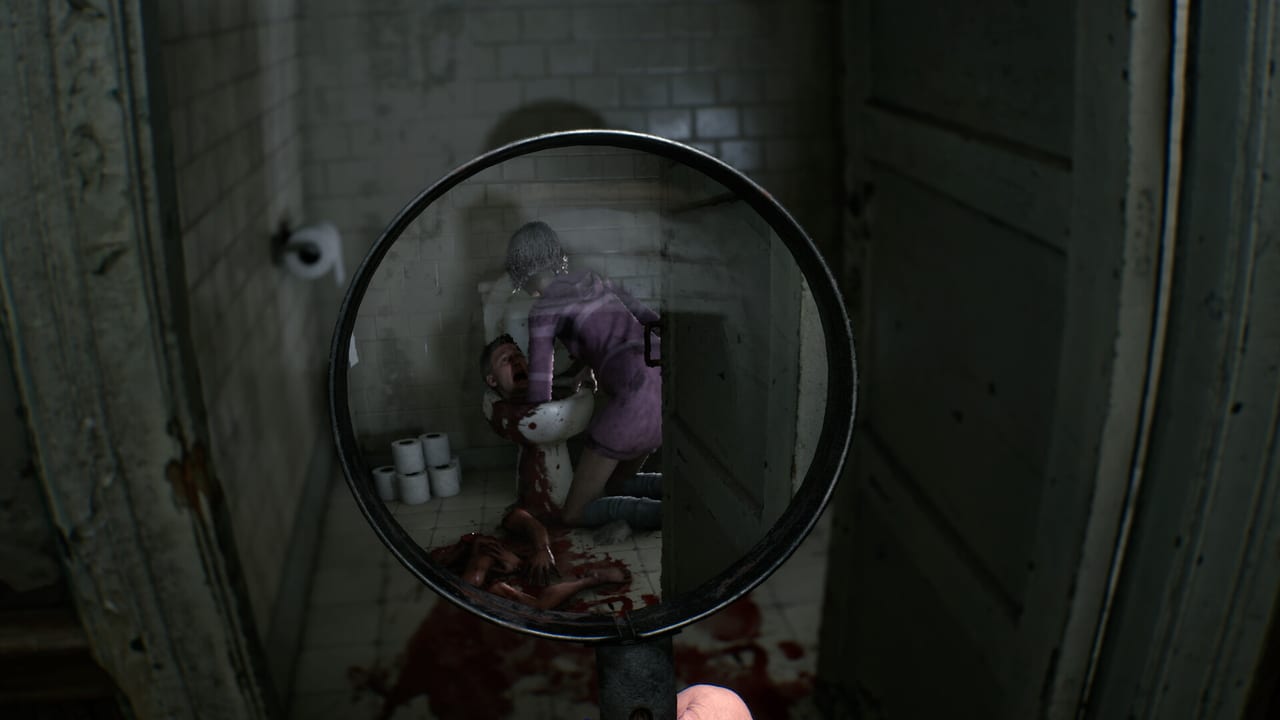
Rehaunted asks you to investigate a brutal crime scene inside a house that will not let its evidence agree. You are Connor Raines. A young woman has been found dead in her home. Blood traces, fingerprints, hidden recordings, personal belongings, and stranger details all claim a night, and they do not claim the same night. Cauchemar’s design promise is blunt: the game never directly tells you the answers. You connect evidence, reconstruct events, and live with a conclusion you built.
This page is the kit and the mindset. Sequence — when to sweep, when to re-scan — lives in the investigation walkthrough. Survival when the tall supernatural woman interrupts lives in how to survive. If you still need install and first-hour setup, use Getting Started.
The forensic kit
Connor does not solve the case with a gun. He solves it (or fails to) with five things that Steam and the studio keep naming together:
- UV flashlight
- Camera
- Magnifier
- Walkie-talkie radio, with dialogue choices and a partner detective
- Evidence board
Studio messaging around the magnifier is the one players underestimate: paranormal presence and some clues are often visible only through that lens. If you play Rehaunted as a walking tour with the UV on “sometimes,” you will walk past the game.
The detective toolkit page is the gadget reference. This page is how you use those gadgets as a method. Use one tool at a time on purpose. A room is not cleared because you entered it. A room is cleared when naked-eye, UV, and magnifier have all had a pass, photographs exist for anything that might change, and the radio has heard the contradiction you cannot resolve in your head.
UV flashlight
The UV light is for residue: stains, prints, marks, and cleanup that ordinary lamps will not confess. Run it along floors, skirting, glass, bedding, and anything that would hold a body or a struggle. Then run it again on the objects you already called “props.”
UV is a second map, not a night-vision crutch. If you leave it on all the time you will stop seeing the first map — the mundane house the case is pretending to be. Alternate. Naked-eye tells you the story someone wanted. UV tells you the story someone tried to hide.
When UV shows something the rest of the room denies, photograph it before you chase a new doorway. Traces are easy to “remember wrong” once the radio offers a tidier theory.
Camera
The camera is your memory that cannot gaslight you. Rehaunted will pile contradictions. A recording will disagree with a print. A belonging will disagree with both. Your job is not to pick a favorite in the moment. Your job is to keep a record of states: where a thing was, how it looked under UV, whether a door was open.
Photograph:
- The obvious crime-scene facts, so later “reveals” have a baseline.
- Anything only a tool made visible.
- Personal belongings that feel too specific to be set dressing.
- The evidence board itself after you rearrange it, if the UI lets you. Your theory will drift; the photo will not.
Do not treat the camera as a scrapbook of scares. The tall woman is a survival problem, not a collectible. Shoot evidence. Then move.
Magnifier
The magnifier is close inspection and, in this game, a supernatural aperture. Look at documents, photos, wounds, fabrics, walls, and anything the UV only hinted at. Then look at empty surfaces. The whole pitch of Rehaunted is that the house is never as empty as it feels.
Habits that pay off:
- Finish a UV pass, then magnify; do not swirl both tools in panic.
- When a space feels “done,” magnify the dullest wall in it. Dull is where people stop looking.
- If you see something only through the lens, photograph it if the camera will take that shot, or write it into the board in language that admits it was lens-only. Otherwise you will later remember it as a normal clue and wonder why the partner is confused.
During a chase, the magnifier is a liability. How to survive is explicit: drop the tunnel vision, live, then come back. A half-finished magnifier pass is an unfinished room.
Walkie-talkie and the partner detective
You are alone in the geometry and not alone on the channel. Radio communication with dialogue choices is a listed feature, not a voicemail gag. The second detective is there to expand the investigation and to challenge assumptions. Steam even tags the game with dynamic narration; play as if your answers matter even when the house refuses a score.
How to talk without wrecking the case:
- Radio after you have new documentation, not after every cupboard.
- Choose lines that match photographs and traces, not the twist you want to be true.
- If a timed prompt appears with missing options, that is a reported launch bug. Retry. Do not invent a “hidden silent option” unless a patch notes it. See tips and known bugs.
The partner is also a character. Framing for Connor and the voice on the radio belongs on the players hub. Do not confuse a persuasive line of dialogue with proof. In Rehaunted, charisma is another kind of contradiction.
Evidence board
The board is where the game’s thesis lives. You connect evidence. You reconstruct events. You build your own conclusions. You do not wait for a cutscene to stamp CANON on a timeline.
Pin disagreements in the open:
- Blood that implies one sequence of violence.
- Fingerprints that do not belong to that sequence.
- Recordings that describe a night the belongings cannot support.
- Lens-only paranormal traces that may be truth, hallucination, or both — the game is not going to pick for you.
If the board looks messy, you are using it correctly. If it looks like a single clean plot, you probably deleted the clue that made you uncomfortable. Put it back. Endings explained is the page for what “finishing” means when nobody grades the board.
Living with contradiction
Investigation horror usually converges: enough proof, one ghost type, one killer. Rehaunted advertises the opposite. Play against the urge to “solve” early. The walkthrough layers exist so you do not crown a theory at the end of room one.
When two clues fight, your next action is another pass with a different tool, or a radio call that admits the fight, not a leap to a fan ending you read in a comment thread. This wiki will not publish a canon culprit. Mixed launch reviews and a two-to-three-hour runtime mean you have time to look twice and not enough time to farm a hidden official chart that does not exist.
If polish problems are blocking the kit — stuck radial menu, radio timer — fix the UI first via tips and known bugs, then come back to looking. Patches will show up on the updates hub. The Guides Hub remains the index if you need survival or review context instead of another paragraph about the lens.
Frequently Asked Questions
Quick answers to the most common questions.
Which tool should I use first in a new room?
Naked-eye, then UV, then magnifier, with photos whenever something might change. The investigation walkthrough is the full layer order.
Why does the magnifier matter so much?
Paranormal traces and some clues are often only visible through it. Skipping the lens is skipping a third map of the house.
Should I tell the partner every theory?
Tell them documented contradictions, not wishes. Radio choices expand the case. If a timer is missing options, retry — that is a launch bug covered in tips and known bugs.
What if evidence will not fit on the board?
Leave the fight visible. Rehaunted does not hand you one official answer. Endings explained covers how to close a case you still cannot tidy.
Is there a video of the investigation tools?
IGN’s seven-minute gameplay capture sits on Getting Started. Use it for pacing; use this page for how to look.