
Rehaunted Detective Toolkit
UV, camera, magnifier, radio, and the board — five ways the house disagrees with itself.
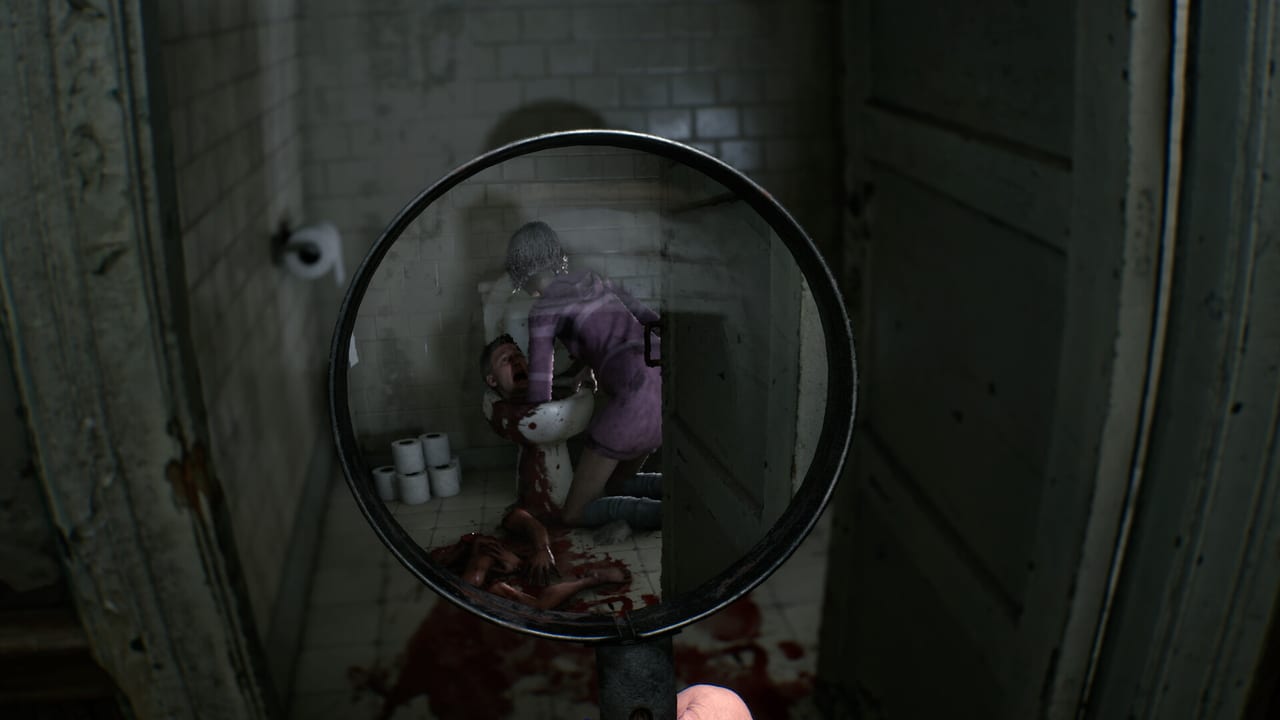
Connor Raines does not solve Rehaunted with a gun. He solves it, or fails to, with a small forensic kit: a UV flashlight, a camera, a magnifier, a walkie-talkie, and an evidence board. Cauchemar’s pitch is that those tools will show you things the naked eye misses, and that the things they show will not politely line up. This page is the deep dive on each gadget, how they conflict on purpose, and how to use them without turning every room into a screenshot dump.
Read controls first if you cannot open the radial menu on command. Read how to investigate if you want room order and note-taking. This article is about the kit itself.
UV flashlight — make the invisible expensive
The UV light is the “something was here” tool. Blood traces, residues, and marks that look like clean paint under tungsten can bloom under ultraviolet. That does not make them honest. A stain can be old, staged, smeared by later movement, or sitting next to a second stain that tells a different story.
Use UV as a pass, not as a lifestyle. Walk a room with the light off and learn the furniture. Then run the UV slowly along floors, door edges, sinks, bedding, and anything that would be cleaned in a hurry. Pause on blooms. If you UV-sprint, you will photograph glare and miss the edge of a print.
Turn the light off when you are done. A stuck flashlight overlay is one of the launch issues players have already reported; leaving UV up also wrecks your night vision and can make the house’s taller occupant easier to notice you. Survival notes belong on how to survive. The toolkit rule is simpler: UV is a scan, then it goes away.
Camera — record the conflict, not the vibe
The camera is for evidence you cannot carry and for details you will not remember after the next scare. Photograph:
- The UV bloom and the same spot with the light off, so you can tell residue from décor.
- Fingerprints, labels, screens, and handwritten fragments the magnifier found.
- Two objects that cannot both be true in the same timeline (a locked inner door and a witness note that claims someone left through it, for example).
Do not photograph every gloomy corridor because it looks like a trailer still. Storage in your head is the scarce resource, not film. The campaign is two to three hours; you can drown that runtime in identical shots of peeling wallpaper.
Launch comments have joked about a camera without a useful flash. Play the tool you have. If a corner is too dark, raise the UV or the room light instead of waiting for a flash bind that may not exist. Confirm camera raise/lower on the controls page, then keep moving.
Magnifier — the game’s actual microscope
The magnifier is the signature toy. Trailers and the IGN gameplay drop put it in your face for a reason: some clues, and some supernatural tells, only resolve when the lens is up. That is both a detective mechanic and a vulnerability. A magnifier is a commitment. You see a postage-stamp of the world. You do not see the doorway behind you.
Protocol:
- Clear the room enough that you can stand still.
- Raise the lens on a specific target — a fiber, a smudge, a photo corner, a screen pixel, a wound-adjacent detail — not on “the desk” as a whole.
- Say the finding out loud or pin it immediately. Magnifier memories fade the moment the entity forces you to lower the glass.
- Lower the lens before you rotate or walk. Investigating while zoomed is how people clip into geometry or miss a spawn.
If a surface looks ordinary until magnified, treat that as a design invitation, not as optional flavor. Rehaunted’s Reddit announcement from the studio even framed paranormal and clue reads as something you often only get through the glass. Use it on the ugly, boring, and too-clean objects, not only on the gore.
Studio extras: rebuilt magnifier, UV, phone, laptop, hidden numbers
A Cauchemar pre-launch announcement (the 12 Sep 2026 ready post) described a rebuilt magnifying-glass system, added UV flashlight interactions, phone events, hidden numbers to call, a laptop, and a mobile phone. Treat that list as studio messaging, not as a puzzle solution dump. This page will not publish PINs, which numbers to dial, which app to open, or a walkthrough of those screens.
- Rebuilt magnifier. The lens is a first-class tool the studio says it rebuilt, not a zoom gimmick. Use it as the section above already argues: specific target, then lower the glass before you walk.
- UV interactions. Residues can be more than a pretty overlay. Still run UV as a pass. Still photograph blooms. Still do not invent a chemical chart Cauchemar did not print.
- Phone, laptop, hidden numbers to call. They exist as investigation surfaces the studio named. Inspect them with the same three-pass method as any other clue (naked-eye, UV, magnifier). If a keypad or a screen is waiting, look — then pin what you actually saw. Do not ask the radio partner to recite a number this wiki will not invent; radio dialogue is for contradictions, not for skipping inspection.
If a later Steam news post explains those props, update this section. Until then, the honest instruction is: they are in the announcement, so look for them, and do not download a spoiler PIN list.
Radio — a second detective, not a hint button
The walkie-talkie keeps you in contact with another detective. You report, they push back, and dialogue choices can widen the investigation. Tech coverage of the game treats that radio as a theory-testing mechanic: you are not collecting a ghost type for a validated answer, you are arguing a case with a partner who is not in the room.
That partner is unnamed on this wiki because Cauchemar has not published a cast list. Do not import a name from a comment section. Play the voice you are given.
Radio rules that save runs:
- Key the radio in a stable spot. Launch players report a dialogue timer that can fail — a prompt expires, a line sticks, or the conversation ignores what you just found. A quiet landing is the only mitigation you control.
- Report contradictions, not vibes. “The blood trail and the locked door cannot both be first” is useful. “This house is evil” is not a finding.
- If a choice appears, pick the question you actually care about. Rehaunted does not grade you against a hidden true ending file; see endings explained for what “your own conclusion” means.
- Never start a long exchange while the tall woman is occupying the hallway. Survive first.
Evidence board — where disagreement has to stay visible
The board is the kit’s memory. Pins, photos, and notes should reconstruct events, not decorate a conspiracy wall. The Steam copy is blunt: connect evidence, reconstruct what happened, build your own conclusions. The game will not circle the correct suspect in red.
A useful board has three kinds of cards:
- Observed — things you saw, photographed, or magnified. Time and room if you can.
- Claimed — things the radio partner, a recording, or a document says. Mark them as claims.
- Impossible pairs — two observed facts that cannot both be naïve. Those pairs are the game.
If you only pin “creepy,” you will walk into the finale with atmosphere and no argument. If you pin every prop, you will not be able to read the board when it matters. Prefer fewer, sharper cards. Update them after each major room; do not wait until the house is finished with you.
A working loop (so the kit stays a kit)
- Naked-eye sweep. Doors, bodies of furniture, anything that looks recently moved.
- UV pass. Mark blooms. Photograph only the ones that change the story.
- Magnifier pass on the blooms and on “too clean” surfaces.
- Radio the contradiction while you still remember which room it was.
- Board the impossible pair.
- Only then walk toward the next noise.
Skip a step when the entity forces you to. Do not skip the board forever. The walkthrough can tell you a route through the property; it cannot hold the argument for you. Connor’s page, Connor Raines, is about the person carrying this kit. Cast and entity is about everyone the kit is pointed at.
If a tool physically fails — overlay stuck, radio prompt dead, camera clipped through a wall — that is a launch-build issue, not a hidden puzzle. Park the run, read tips and bugs, and come back. The house is already lying. The UI should not have to.
Frequently Asked Questions
Quick answers to the most common questions.
What tools are in the Rehaunted detective kit?
UV flashlight, camera, magnifier, radio / walkie-talkie, and an evidence board. There is no combat weapon loadout.
Does the game tell me when I used the right tool?
No. Rehaunted withholds a single confirmed case file. Tools reveal information; you still have to reconcile it. See endings explained.
Should I keep the UV light on all the time?
No. Use it for passes, then switch it off. It hurts night vision, and a stuck flashlight overlay is a known launch complaint.
When should I talk on the radio?
When you have a specific contradiction and you are not being chased. Launch builds can glitch radio timers, so do not start a conversation mid-sprint.
Is the magnifier optional flavor?
No. Some clues and paranormal tells are designed to resolve through the lens. Cauchemar also described a rebuilt magnifier in a pre-launch announcement. Raise it on purpose, then lower it before you walk.
How do the phone, laptop, and hidden numbers work?
The 12 Sep 2026 studio ready post named phone events, hidden numbers to call, a laptop, and a mobile phone. This wiki will not invent numbers or app steps. Inspect them like any other clue.